
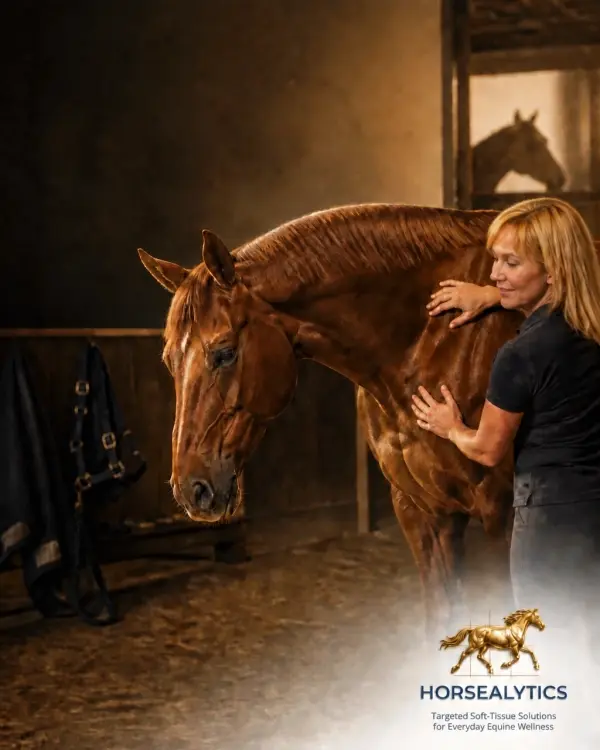
Equine massage therapy is becoming an increasingly popular part of horse care. Owners use it to support comfort, mobility, relaxation, performance, and recovery. But massage is not a replacement for veterinary diagnosis or treatment. Its greatest value comes from using it thoughtfully as part of a broader wellness and rehabilitation plan.
This guide explains why equine massage therapy matters, when it may be appropriate, how it relates to veterinary care, and what horse owners can expect from a professional session.
Key point: Equine massage therapy is complementary care designed to support soft-tissue comfort, movement, and relaxation, not to replace veterinary medicine.
What is equine massage therapy?
Equine massage therapy is the professional manipulation of a horse’s muscles and other soft tissues. A trained practitioner evaluates the horse’s posture, movement, muscle tone, and response to touch before developing a session around the horse’s individual needs.
The purpose is not simply to “rub sore muscles.” Professional bodywork considers how different areas of the horse work together. Tension in one region may develop because another region is compensating for discomfort, altered movement, training demands, saddle pressure, or an old injury.
Massage may focus on areas such as the neck, shoulders, back, hindquarters, or limbs. The exact approach depends on the horse’s history, workload, condition, and veterinary recommendations.
According to Mad Barn’s evidence-based overview of massage therapy in horses, practitioners and veterinarians commonly use massage to support performance, rehabilitation, stress reduction, and age-related stiffness. However, the same review notes that more research is needed to confirm the size and consistency of many claimed effects.
Why does equine massage matter?
Horses rely on coordinated movement. Their muscles, connective tissues, joints, hooves, tack, and nervous system all influence how comfortably they stand, walk, exercise, and recover.
When soft tissues remain tense, a horse may move less freely or begin compensating elsewhere. Over time, compensation can affect posture, balance, stride quality, and willingness to work. Massage may help address the soft-tissue component of these patterns while the underlying cause is assessed and managed.
Potential reasons owners and veterinary teams consider massage include:
- Supporting muscle comfort after exercise
- Encouraging relaxation in anxious or stressed horses
- Maintaining mobility in senior horses
- Supporting rehabilitation plans after injury
- Addressing secondary muscle tension caused by compensation
- Promoting awareness of changes in posture or muscle symmetry
- Helping performance horses remain comfortable during regular training
These benefits should be viewed as possibilities, not guarantees. Every horse responds differently, and massage is most useful when it is connected to a clear care goal.
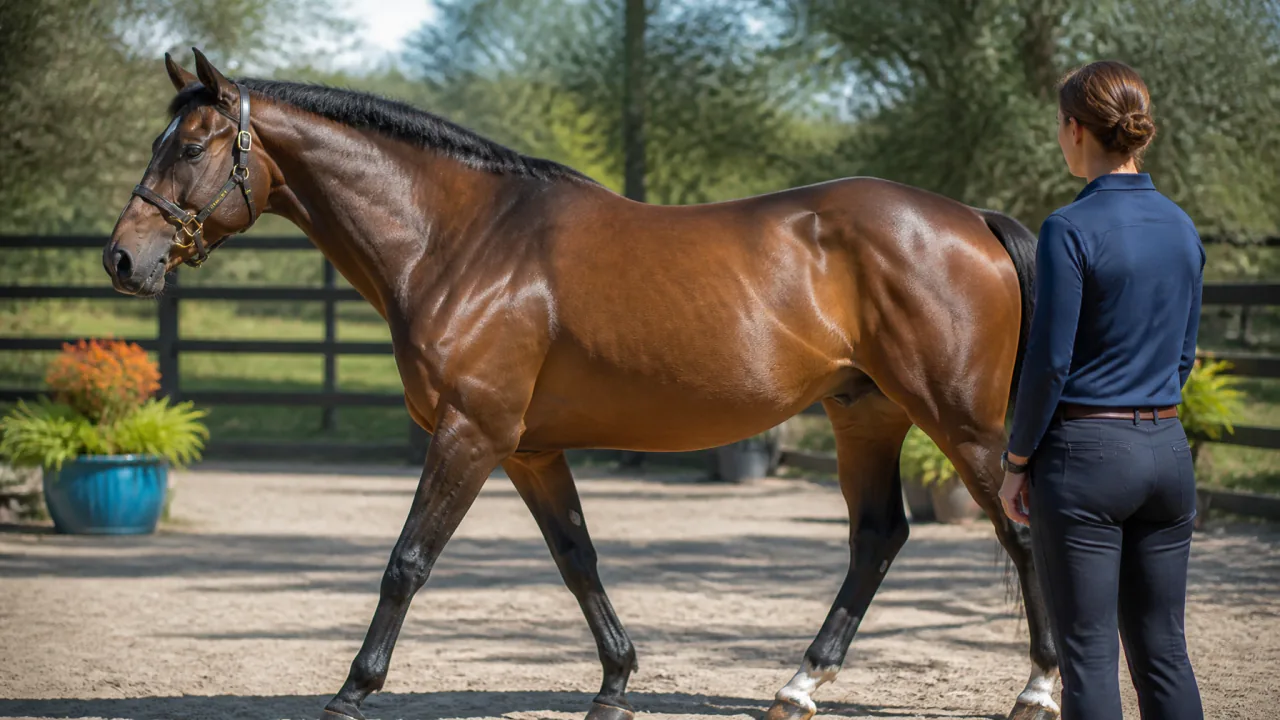
Possible benefits for comfort and movement
Muscle relaxation and soft-tissue comfort
Training, competition, travel, stall rest, and everyday activity can all contribute to muscle tension. Professional massage may help reduce the feeling of tightness in soft tissues and support a more comfortable posture.
Some horses appear visibly relaxed during treatment. They may lower their heads, soften their eyes, sigh, chew, or rest a hind leg. These behaviors can indicate relaxation, although they should always be interpreted in context.
Mobility and flexibility
Massage may support mobility by improving the comfort and pliability of muscles and fascia. Research summarized by Mad Barn reports potential improvements in stride length and flexibility, but the overall evidence remains mixed.
One research study found modest increases in stride length after massage, while another examined improved hind-limb movement. These findings are encouraging, but small studies should not be treated as proof that massage will improve every horse’s performance.
Key point: Massage may help a horse move more comfortably, but improved movement should never be used to dismiss unexplained lameness or pain.
Stress reduction
Massage may also influence a horse’s emotional state. A 2025 pilot study published in Animals examined five recreational horses and found lower salivary cortisol levels and fewer conflict behaviors after massage sessions. The horses also displayed relaxation behaviors such as chewing, half-closed eyes, and a relaxed lower lip.
This is useful evidence, but it is still a small pilot study. It suggests that massage may support relaxation and welfare, while also showing why larger and more rigorous studies are needed.
For owners, the practical meaning is simple: a calmer horse may be more comfortable during grooming, preparation, rehabilitation, or routine handling. Massage should support trust and welfare, not be used to force a horse to tolerate pain or discomfort.
When might a horse benefit from professional massage?
Professional massage may be considered for several different situations.
Horses in regular work
Sport and pleasure horses can develop muscle tension from repeated movement and training. Maintenance bodywork may help owners monitor comfort and identify changes before they become more significant.
This does not mean massage prevents all injuries. Sound conditioning, appropriate rest, proper saddle fit, farriery, nutrition, and veterinary examinations remain essential.
Horses returning to work
A horse returning to work after time off may have altered muscle development or movement patterns. Massage may be included in a rehabilitation plan to support soft-tissue comfort as the horse gradually rebuilds strength.
The timing and scope of treatment should come from the veterinarian or rehabilitation team, particularly when the horse has a diagnosed injury.
Senior horses
Older horses often experience stiffness, reduced muscle mass, and changes in mobility. Massage may support comfort and relaxation, especially when combined with appropriate exercise, turnout, dental care, nutrition, and veterinary monitoring.
For a senior horse, the goal is usually quality of life rather than athletic performance.
Horses showing changes in behavior
Resistance to grooming, saddling, girthing, bending, or forward movement may have a physical component. Massage could be helpful if muscle tension is part of the problem, but behavior changes should not automatically be labeled as training issues.
Pain, ulcers, dental problems, saddle fit concerns, lameness, and other medical conditions should be considered first.
How massage relates to veterinary care
Massage therapy works best when the practitioner and veterinarian communicate openly. If a horse is suddenly lame, has heat or swelling, or shows signs of illness, the priority is veterinary evaluation.
Massage should generally be postponed or modified when a horse has:
- Sudden or significant lameness
- Heat, swelling, bruising, or acute pain
- Open wounds or active skin disease
- Suspected tendon, ligament, or muscle injury
- Fever or systemic illness
- Recent trauma
- Neurological signs such as weakness or incoordination
- Unexplained severe back pain
The Mad Barn veterinary-reviewed article emphasizes that massage should not be used as a standalone treatment when unresolved lameness or underlying pathology is present.

Key point: A professional massage therapist should know when to refer a horse to a veterinarian rather than attempting to work around an undiagnosed problem.
Veterinary care and massage therapy can complement one another. A veterinarian may identify the primary injury or condition, while a massage therapist may help address secondary muscle tension within the approved rehabilitation plan.
Q&A
Question: What is the difference between PEMF and Red Light Therapy for horses?
Answer: “While red light therapy utilizes specific wavelengths of light to stimulate cellular mitochondria and support surface soft-tissue recovery, pulsed electromagnetic field (PEMF) therapy uses low-frequency electromagnetic pulses to influence the electrical activity and overall homeostasis of deeper tissues.”
— Christa Martin, Founder of Horsealytics
Q&A
Question: How often should equine PEMF and red light therapy be used?
Answer: “For most maintenance and post-exercise recovery routines, applying red light therapy and PEMF sessions consistently—typically 3 to 5 times per week or for 15 to 30 minutes per target area—yields the most reliable improvements in circulation and tissue comfort.”
— Christa Martin, Founder of Horsealytics
Q&A
Question: Can equine massage, PEMF, and red light therapy replace veterinary care?
Answer: “Modalities like massage, PEMF, and red light therapy are strictly complementary wellness tools designed to support soft-tissue recovery and comfort; they are never a replacement for a formal veterinary diagnosis or medical treatment.”
— Christa Martin, Founder of Horsealytics
What should owners expect from a professional session?
A professional session usually begins with conversation. The practitioner may ask about:
- The horse’s workload and discipline
- Recent changes in behavior or performance
- Previous injuries or veterinary diagnoses
- Saddle and equipment concerns
- Current rehabilitation instructions
- The owner’s goals for the session
The practitioner may then observe the horse standing and moving. They may assess posture, muscle symmetry, gait, and the horse’s response to gentle contact.
Treatment should be adapted to the individual horse. A professional should explain what they are noticing, what the session is intended to support, and whether veterinary follow-up is appropriate.
Some horses relax quickly. Others may be cautious, especially during their first session. A good practitioner respects the horse’s signals and does not force participation.
Owners should also expect realistic recommendations. A responsible therapist will not promise to cure lameness, eliminate every injury risk, or replace veterinary care.
Choosing an equine massage therapist
Equine massage therapy is not regulated uniformly everywhere, so training and experience can vary. Before booking, ask about:
- Formal education in equine anatomy and massage
- Supervised practical experience
- Understanding of horse behavior and safety
- Professional certifications or memberships
- Communication with veterinarians and rehabilitation teams
- Insurance and professional policies
- How they handle referrals and contraindications
The practitioner should be comfortable explaining the limits of massage therapy. They should also be willing to work within veterinary instructions when a horse has a diagnosed condition.
The evidence: promising, but still developing
The evidence for equine massage is best described as supportive but incomplete. Research has reported possible effects on relaxation, cortisol, pain thresholds, flexibility, stride length, and heart rate. At the same time, many studies are small or use different methods, making results difficult to compare.
That balance matters. Horse owners deserve access to supportive therapies, but they also deserve honest information about what research can and cannot prove.
Massage may be a valuable part of a horse’s care program when it is delivered by a trained professional and coordinated with veterinary guidance.
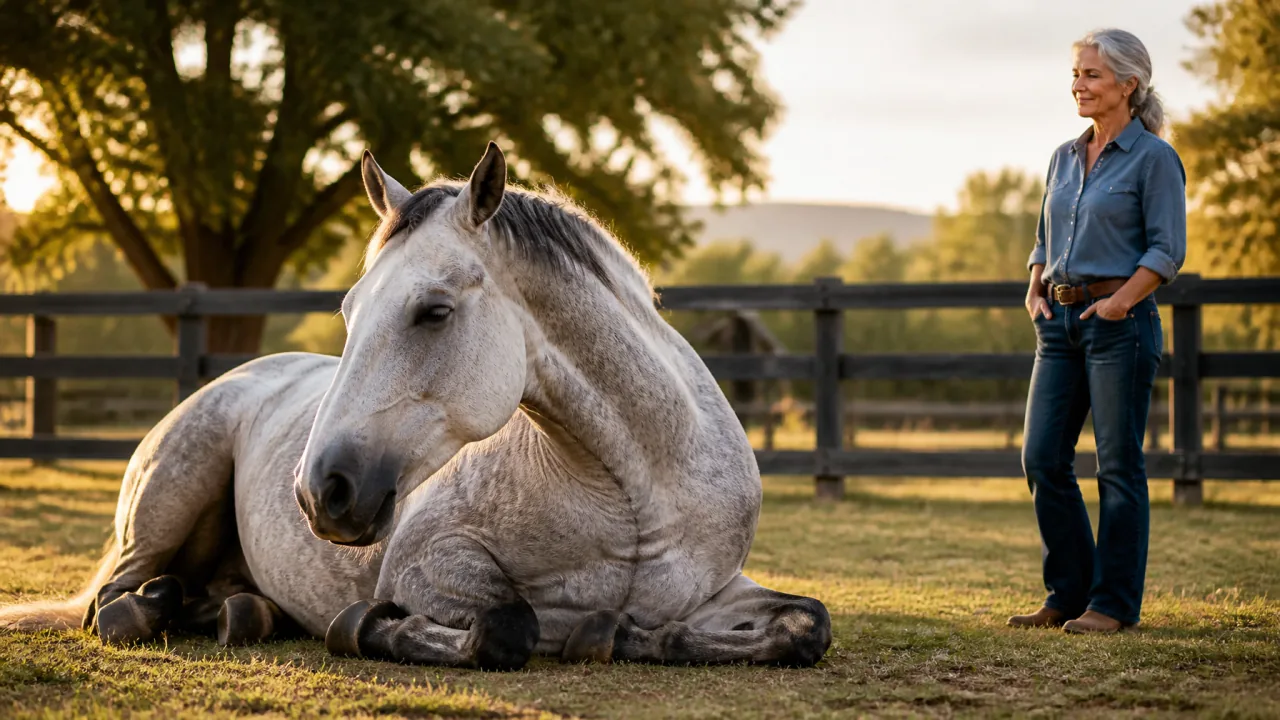
Final thoughts
Equine massage therapy matters because comfort influences nearly every part of a horse’s life: movement, training, recovery, behavior, and trust. Professional bodywork may help support soft-tissue comfort and relaxation, especially for active, aging, recovering, or anxious horses.
The best results come from a team approach. Veterinary care identifies and treats medical problems. Training and conditioning build appropriate strength. Proper tack, farriery, nutrition, and management support the whole horse. Massage can be one part of that larger plan.
Horsealytics provides professional horse massage services focused on comfort, wellness, and recovery. To learn more or schedule a session, call (858) 848-9862 or visit the Horsealytics Facebook page.
Sources and further reading
- Effect of Massage on Stress Indicators in Recreational Horses: A Pilot Study : Animals, 2025
- Massage Therapy in Horses: Benefits, Techniques & Trigger Points : veterinary-reviewed educational overview
- The Effects of Massage and Performance, Muscle Recovery, and Injury Prevention : Sports Medicine review of massage mechanisms
- The Relationship Between Massage to the Equine Caudal Hindlimb Muscles and Hindlimb Protraction : Equine Veterinary Journal research study
- A Preliminary Study on the Effect of Massage to Reduce Stress in the Horse ( Journal of Equine Veterinary Science study)